

Chasing Dionysus
Our editor goes on a Greek Island cruise in search of Dionysus… And Zeus… And the Colossus… And the Earth Goddess… And Lord Byron…
“Opa!” cheers one of the locals as he lifts his bag off the airport’s baggage carousel. Another is sitting opposite me rhythmically clicking his worry beads. I don’t think he really has that much to worry about though, as he’s impeccably dressed and has some very stylish Calvin Klein luggage sitting by his feet. I look up at the wall and an advert that informs me that the Plaka district of Athens is the ‘Neighbourhood of the Gods’, due to its proximity to the Acropolis and the major archaeological sites.
Hmmm. That could be a good place to start my search for my favourite Greek God, Dionysus: the god of wine and fertility. Dionysus also has a penchant for theatre, ‘unrestrained consumption’ and ‘ritual madness’, so I ask you: how could he fail to be my favourite Greek god?
So that evening, off I go to Plaka to hunt for him—and it’s not long before I bump into him. Beneath the illuminated eye of the Parthenon, I dander by the Temple of Zeus and the Arch of Hadrian and find myself on the ‘Street of the Tripods’, which follows the ancient route that hosted the grand procession to the Theatre of Dionysus during the ‘Great Dionysia’ dramatic festival. Celebrating rebirth, this festival took place each spring from the 6th century BC until the fall of the Athenian Empire.
This is where drama was born; where comedy would be laughed at and tragedy would be cried to. People would sing and dance and revel in a state of madness in the worship of the Dionysus. Animals would be sacrificed in his honour, slaves would be freed, men would dress up as satyrs and large amounts of fabulous wine would be consumed.
A good time all round, I’m sure you’ll agree, which is exactly what I’m thinking when I turn a corner and come face-to-face with the most unassuming monument in the most unobtrusive little garden in the heart of Plaka’s higgledy-piggledy maze of streets.
Dionysus has a penchant for ‘unrestrained consumption’ and ‘ritual madness’, so how could he fail to be my favourite Greek god?
And there he is: Dionysus. And he’s busy—turning pirates into dolphins, no less.
The monument was built by the wealthy theatre patron Lysicrates back in fourth century BC, to mark the fact that one of the performances he had sponsored at Great Dionysia had won first prize. The frieze adorning the top of its timeless Corinthian columns depicts my favourite Greek god in all of his glory. He’s sitting and caressing a panther as some of his servants pour him wine and others drive pirates out to sea, where they are promptly being transformed into dolphins. How cool is that?
I reach out and touch the monument and whisper a respectful “Hello” as my eye falls upon a second, smaller monument. I’ve stumbled across a second hero of mine: Lord Byron.
This humble little monument commemorates the fact that Byron—a great hero of the Greek people due to his dedication to Greek War of Independence—stayed at a monastery on this site. At that time, the panels between the columns of Lysicrates Monument had been removed, so Byron used it as his study and he wrote part of Childe Harold there in 1810-11.
I touch the monument and whisper another gentle “Hello” before retiring to Adriano’s street-side restaurant to dine on slow-cooked lamb, sip ouzo and smash plates. As a ponytailed lothario plucks on the bouzouki strings, I’m mesmerized as a middle-aged Greek lady takes to the floor to dance as only the Greeks can: slow and methodical, eyes squeezed tight close with passion as she bends to give the earth before her a meaningful, but highly appreciative, slap.
Shouting “Opa!” as you smash plates on the ground is the norm at Adriano’s and between ouzos and cheerful professions of “Yamas!” (cheers!) with my neighbours, I’m more than happy to join in with the delicious mayhem.
ENGULFED BY GLAMOUR
The following evening, as I wander around the elegantly whitewashed streets of Mykonos, I experience an altogether different vibe. Hauntingly beautiful—there’s just no other way to describe it—this is the playground of the rich and famous. And whereas its streets and beaches regularly welcome the likes of Meryl Streep and Kevin Costner, that doesn’t mean that there is any pretention to be found.
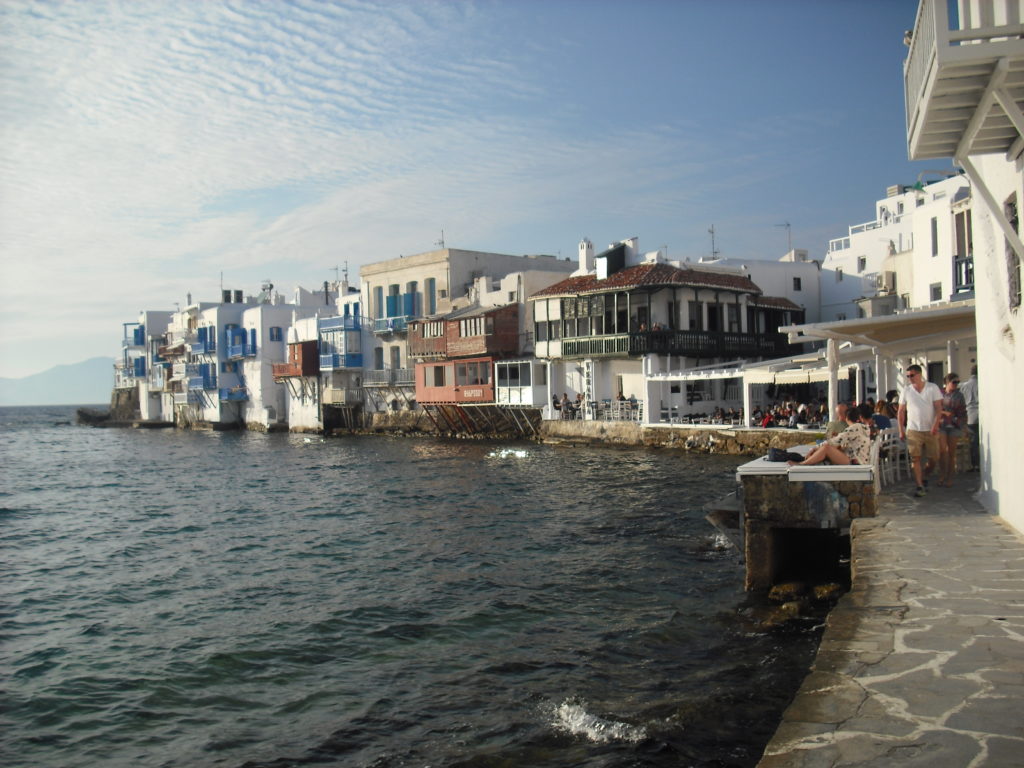
Slinky cats stretch and stroll down impossibly picturesque alleyways, bearded hippie gentlemen with shining eyes smile softly from the doors of quaint jewellery shops, beautiful people share breezy kisses in front of windmills and everyone is drawn to ‘Little Venice’—an inexplicably beautiful part of town where the little white buildings look as if they could tumble right into the sea—to sip white wine and soak up ambient tunes as the sun melts into an unbelievably orange Aegean. I’m engulfed by glamour.
AN APOCALYPTIC CAVE
The following day I’m on Patmos, the Holy Island of St John. The atmosphere is brooding as I enter the cave where John is said to have seen the visions that inspired him to write the Book of Revelation. Located half way up a mountain, the fearsomely-named ‘Cave of the Apocalypse’ is now a UNESCO World Heritage Site together with the Monastery of Saint John the Theologian—a fine monastic complex that dates back to the 10th century AD that today dominates the island’s landscape.
In the cave I touch the ancient rock from where John was said to have received messages of revelation. The cool cave engulfs me, as does the warm scent of incense. Intricate metalwork lanterns hang from the ceiling as visitors respectfully huddle in this living, breathing place of worship.
Monks adorned in glorious black robes graciously smile for the occasional tourist’s camera as they stand in guard of the monastery’s iconic art and gilded treasures.
Further up the mountain at the Monastery of St John, bearded Orthodox monks adorned in glorious black robes graciously smile for the occasional tourist’s camera as they stand in guard of the monastery’s iconic art and gilded treasures.
History quite literally hides in the walls here, as fragments of the ancient Temple of Artemis were used in the monastery’s construction. I wander through cool courtyards and gaze upon 12th century frescoes in the Chapel of the Theotokos. In the museum I ponder over ancient manuscripts and I bump into my old pal, Dionysus, when I come face-to-face with a statue of his secretly-smiling head.
FASCISTS AND SUN GODS
In Rhodes it all goes decidedly Da Vinci Code. I wander up to the Palace of the Grand Master of the Knights of Rhodes, a fairytale Gothic structure that towers over Medieval Rhodes Town. In its time this building has been home to the Knights Hospitaller, Ottoman rulers, the Italian king and Benito Mussolini. I glide over beautifully Hellenistic and Roman mosaic-ed floors, gaze at Byzantine artwork and glare at a plaque near the entrance that’s still adorned with the name of Benito Mussolini.
At the nearby Temple of Apollo I wonder if this could be the actual site of the famous ‘Colossus of Rhodes’, one of the original Seven Wonders of the World. It’s said that this colossal statue of the titan god of the sun, Helios, dominated the ancient port until it was destroyed by an earthquake more than 2,000 years ago.
ANCIENT PEACENIKS
The following day I sail into Heraklion: the ‘City of Hercules’. In Crete the tone turns altogether more feminine as I wander around the ancient site of Knossos and learn all about the most fabulous ancient civilization of them all: the Minoans.
Those clever Minoans were a female-orientated group that flourished from around 3650BC to 1400BC, and when they weren’t busy installing flushable toilets in their queen’s bathroom (yes, it’s true!), worshiping bulls or honouring snake goddesses, they were expanding their reach into the ancient world: without the use of any weapons whatsoever.
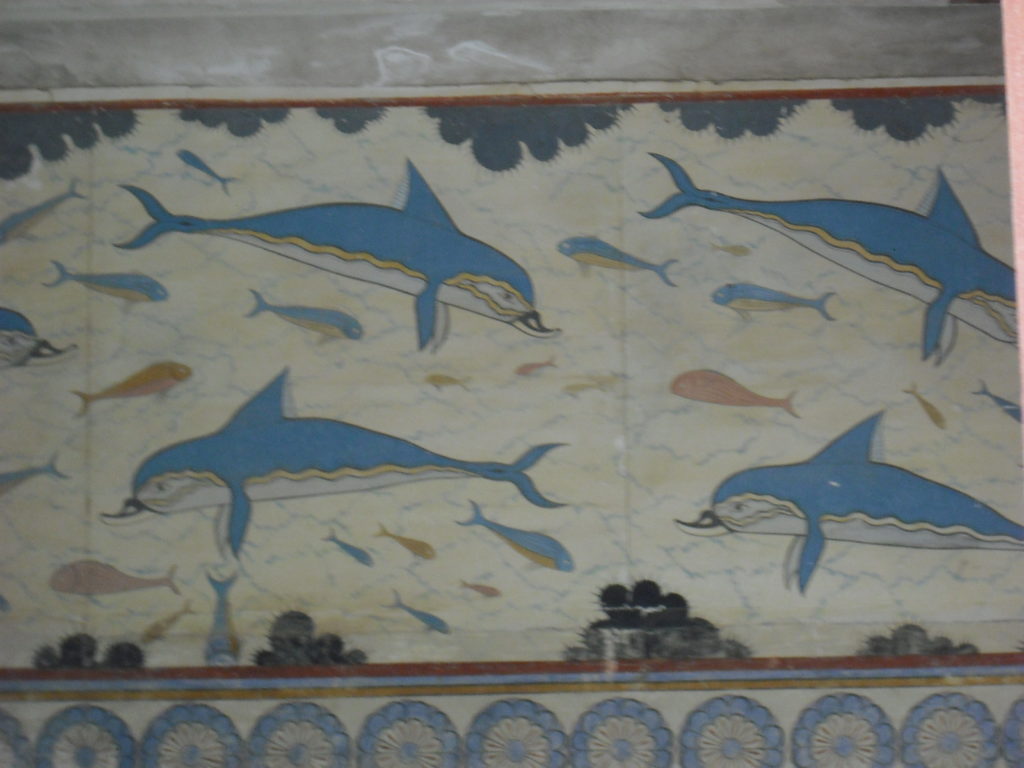
These earth-loving and outward-looking artists and traders successfully expanded their reach beyond the Aegean to the Mediterranean and the Near East, yet there is no evidence that they were violent. They were a peaceful female-centric civilization who worshiped mother goddesses and had no time for war—and as I wonder around the magnificent ancient city of Knossos, I can’t help but think that we can all learn an awful lot from that.
SANTORINI SEDUCTION
Like any great seducer, my Greek Island cruise saves the very best until last: the island of Santorini. This is an island like no other, with whitewashed villages perched high on its volcanic cliffs; where red earth contrasts with traditional blue rooftops, endless skies and the diamond-dancing Aegean waters.
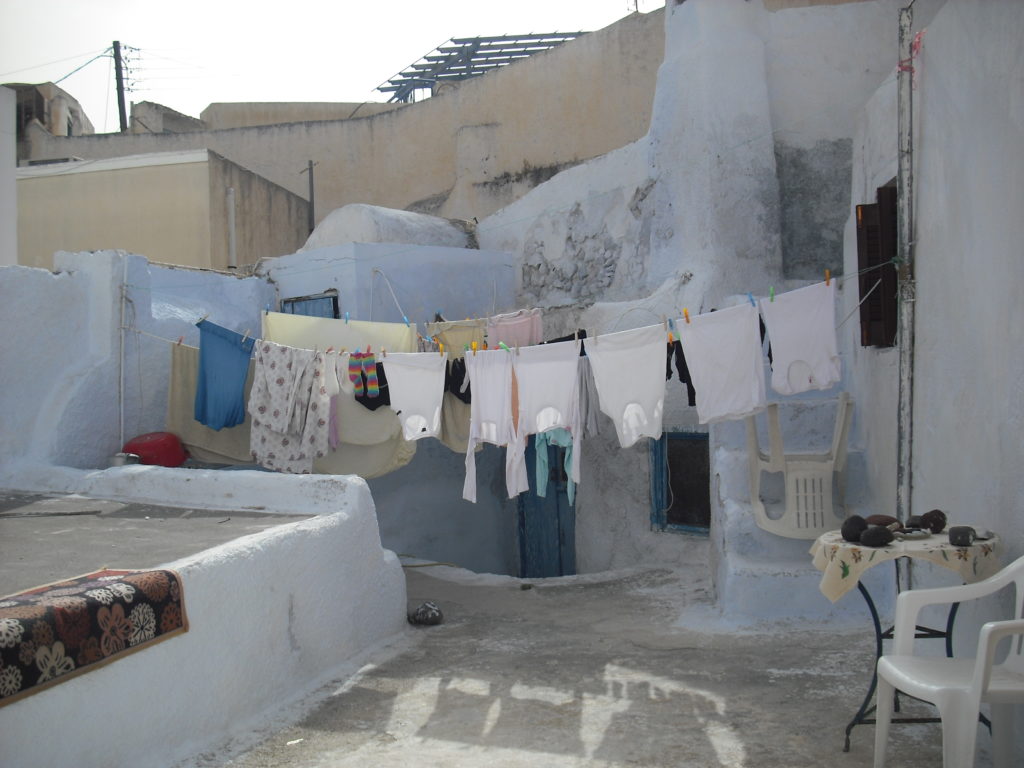
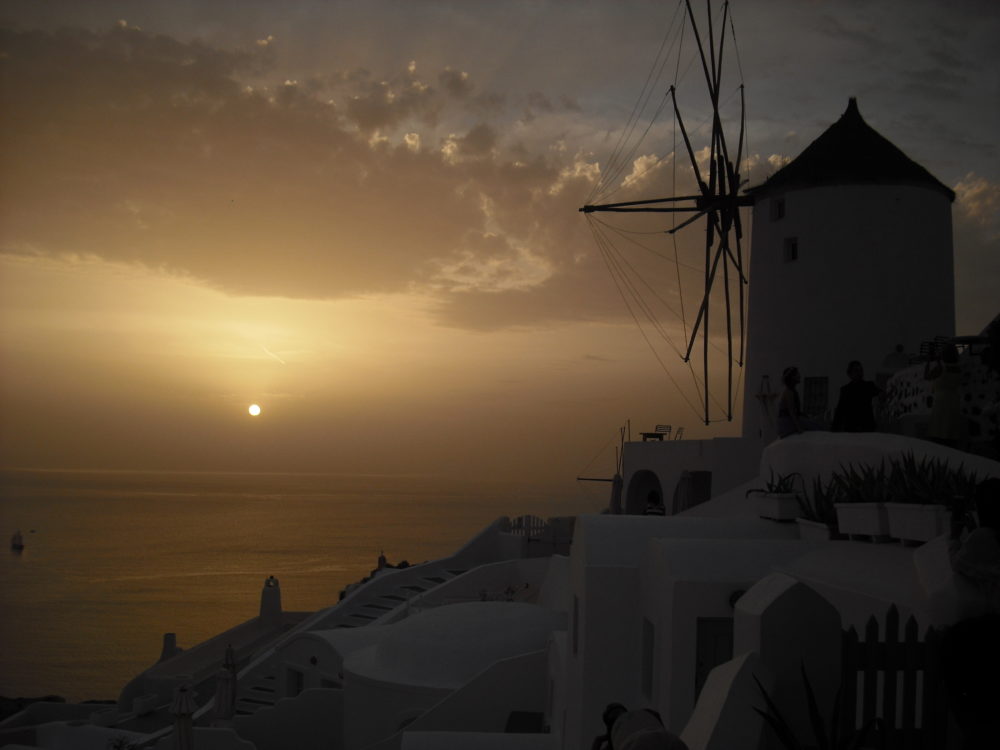
I wander around the village of Megalochori with its chalky chapels, luminous pink flowers, quiet courtyards, traditional town square and flirtatious ocean vistas that hide around every single corner. I drive to picture-postcard Oia with its fancy jewellery stores, time-honoured blue roofs, rustic windmills and beautiful people all perched on their bar stools to soak up the sunset of a lifetime.
As the final rays of the day melt lovingly over the caldera, I understand how breathtaking beauty springs forth from volcanic chaos. And my seduction is complete.
WHEN YOU GO
-
Our editor sailed aboard the Celestyal Olympia with Celestyal Cruises on a four-day ‘Iconic Aegean’ cruise from Athens. Prices start at $822 per person. The company boasts a fantastically-friendly crew and a fabulous range of excursions. All inclusive drink upgrades (alcoholic and non-alcoholic) are available on board. For more information visit celestyalcruises.com.
-
The coolest bar in the whole of Athens has to be Brettos Bar in the Plaka district. This low-key spot is simply oozing with colour and authentic character. Behind the bar the walls are a tapestry of softly-lit multicolour bottles and one entire wall is an altar of wooden barrels of home-made brandies and ouzos—as Brettos is a distillery that has been making its own liquor since 1909.
-
The crowds at the Acropolis in Athens can be a little crazy during peak hours. Escape the cruise ship crowds and do yourself a big favour by going early in the morning or later in the afternoon.
-
If you’re lucky enough to stay at the Royal Olympia Hotel in Athens, make sure you make it up to the rooftop for breakfast. There’s nothing quite like enjoying a good, hearty breakfast while soaking up uninterrupted views of the Temple of Zeus and the Acropolis.
-
When in Rhodes Town, check out the Island Lipsi Restaurant. The chef there does something truly magnificent with feta cheese: imagine a lump of cheese that’s been wrapped in filo pastry, popped into the oven until it’s soft and gooey and then caressed with honey and sprinkled in sesame seeds. It’s insanely irresistible.
AT A GLANCE: THE CELESTYAL OLYMPIA
Order a drink on the Hera deck, beside the Olympia’s sparkling pool, and watch the Aegean unfurl before your very eyes. The ship features two lounges, five bars, three restaurants, a fully-equipped Olympian Gym, the Sana Beauty Centre, a library and a kids’ club.
-
Capacity: 1,664
-
Cabins: 724
-
Length: 215 metres
-
Cruising Speed 17 knots
Images: Vickie Sam Paget. Originally published in Canadian Traveller magazine.
